Z is for zina

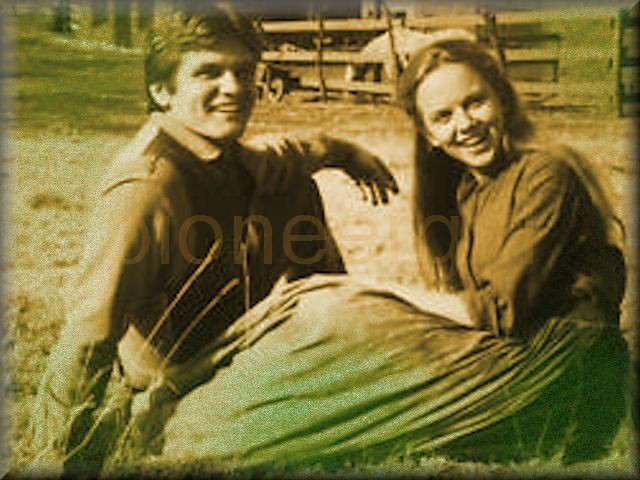
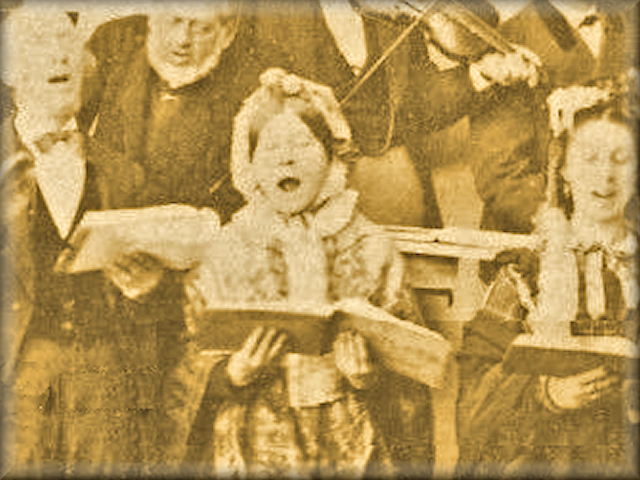
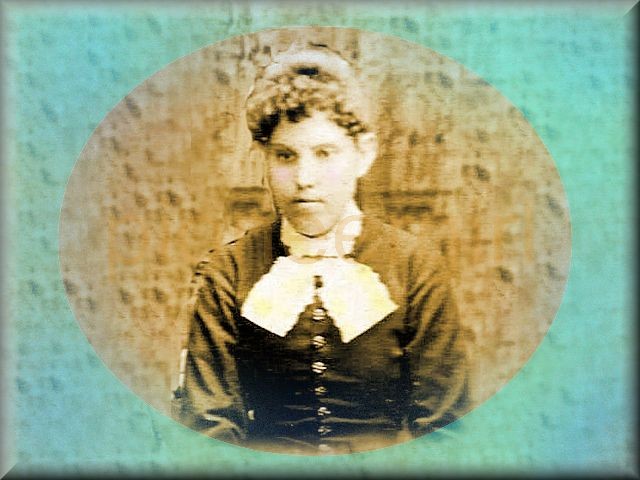
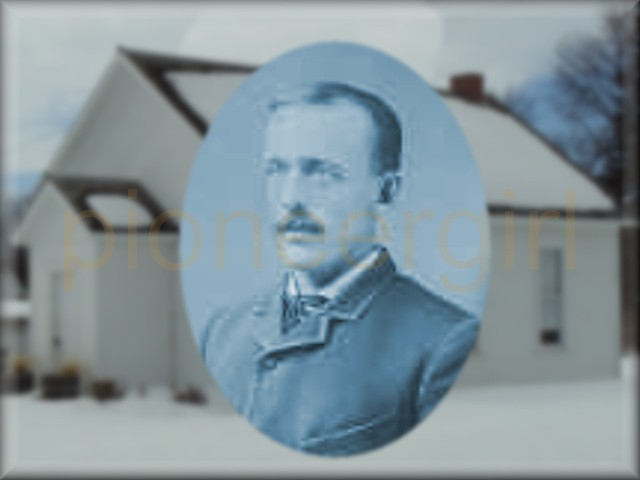
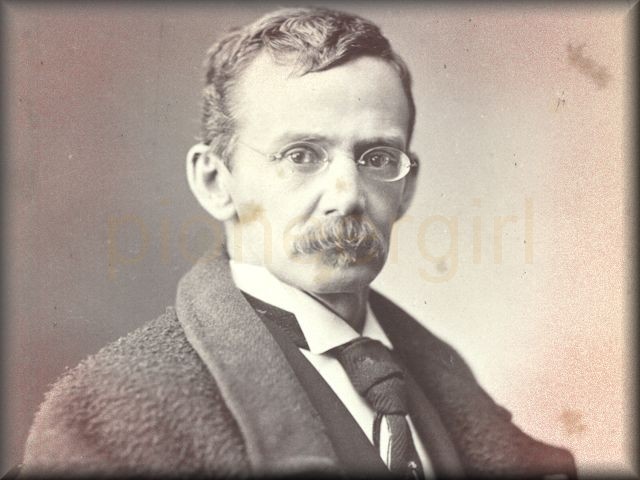
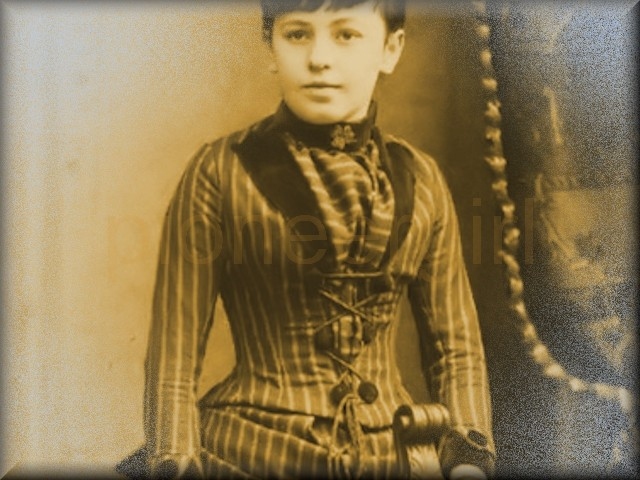
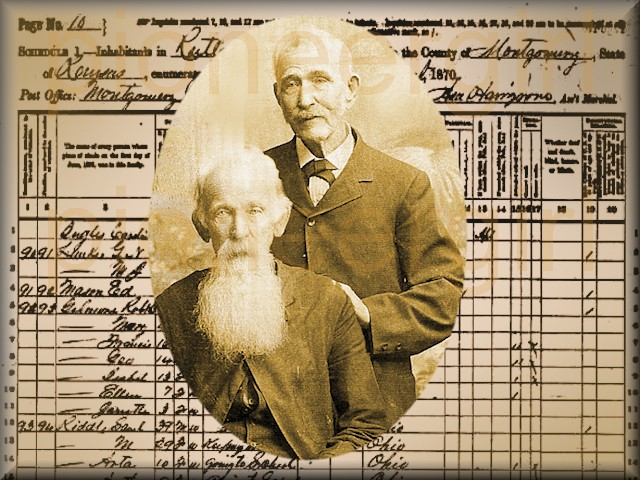
Zina Newell and daughter Emma


Tracing the history of the Newell family back to 1632 shows that Thomas Newell was one ofthe first settlers of Farmington, Connecticut. His grandson, John Newell (son of Thomas’s son, Josiah) was born in 1755 and married Sibyl Andrus in 1791. They bought a farm in Durham, New York, which became well-known as the Newell Farm; it later became an inn and is still standing. John Newell was a Revolutionary War soldier, Justice of the Peace, and a commissioner of highways. He and his wife had nine children; their youngest son was Andrus Newell.

Andrus Newell married (first) Julia Bushnell, and (second) Melissa Porter. Born in 1798, Andrus was still living in 1880 and had 8 children, 29 grandchildren, and 4 great-grandchildren. Son Zina Newell was born 1 September 1826 in Greene County, New York, to Andrus and Julia Newell.

Zina Newell married Sarah Purdy Harrington, daughter of James Harrington and Emeline Chase. Highly educated, Zina taught mathematics at West Durham Seminary for many years. In 1867 (the year of Laura Ingalls Wilder’s birth), Professor Newell was elected Superintendent of Schools.

Zina and Sarah Newell had nine children: Clara (1860), Ernest (1861), Andrus (1863), Emma (1865), Anna (1866), Abigail (1869), Daisy (1872), Raymond (1880), and Linell (1882). Living next door to the Newell family in New York were Merwin and Phoebe Cooley with children Frank and Mary. Emma Newell would marry Frank Cooley in 1883. By this time, the Newell family had moved to Schuyler (Colfax County) Nebraska, where Zina continued to teach school. Merwin Cooley had died, and his widow and children were homesteading in Dakota Territory. Frank went to Nebraska to marry Emma. They settled on a claim near De Smet, and the couple became friends with Laura and Almanzo Wilder. The photo above shows Zina Newell and daughter Emma; it was taken just before her marriage.

In her On the Way Home diary, Laura Ingalls Wilder recorded that the Cooleys and Wilders went through Schuyler, Nebraska, in late July 1894, and that the Cooleys visited friends in town. They must have visited Emma’s parents as well. Sarah Newell died in Schuyler the following year, and Zina Newell died in 1898. They are buried in the old section of the Schulyer City Cemetery, west of the city.

y is for yellow jacket

Thirty bees. Poor Charley.

…All that time Charley had been jumping up and down on a yellow jackets’ nest!

The yellow jackets lived in a nest in the ground and Charley stepped on it by mistake. Then all the little bees in their bright yellow jackets came swarming out with their red-hot stings, and they hurt Charley so that he couldn’t get away.

He was jumping up and down and hundreds of bees were stinging him all over. They were stinging his face and his hands and his neck and his nose, they were crawling up his pants’ legs and stinging and crawling down the back of his neck and stinging. The more he jumped and screamed the harder they stung. -Laura Ingalls Wilder, Little House in the Big Woods

Last summer, I bought these cool rubber bees at the Loftus Store in De Smet. I’m going to use the Garth Williams illustration, plastic ornament, and bees to make a Christmas ornament. They’re not exactly yellow jackets, I know, but I think they’ll get the point across.
x is for x-ray

Ella Boast

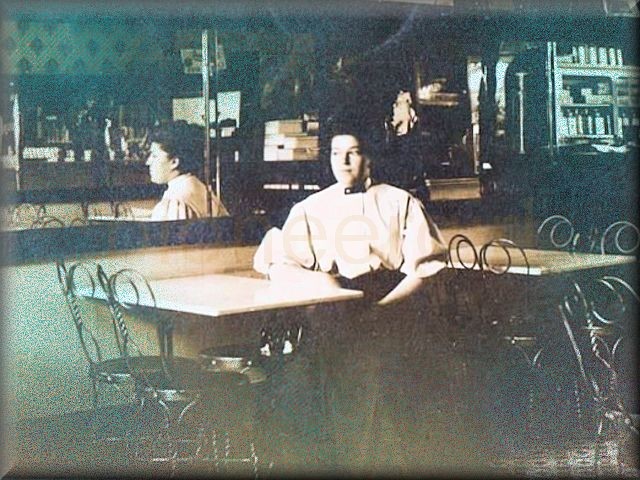
Ella Boast (Mrs. Robert Boast) was a great sufferer from rheumatism. From the late 1880s until her death, she tried every treatment possible to alleviate her pain. She took patent medicines, went to various hot springs to soak in their healing waters, and traveled to Illinois to have faith doctors treat and pray over her. By 1897, Mrs. Boast was only able to sit up for short periods of time; there are many stories of Mr. Boast’s patient and loving care of his wife, and the couple was a familiar sight as he pushed Mrs. Boast around town in her wheel chair. Even though Mrs. Boast was in pain, she and Mr. Boast loved children, and they held entertainments and hosted parties at both their farm and homein town, most notable, their ice cream parties for De Smet’s children.

In 1915, Mrs. Boast traveled to Sioux Falls to undergo a new treatment for rheumatism: having her painful limbs repeatedly subjected to x-rays as a means of alleviating her pain. Of course they were hopeful that the x-ray “therapy” would bring relief, but it didn’t. Mrs. Boast died November 8, 1918.

w is for western reserve

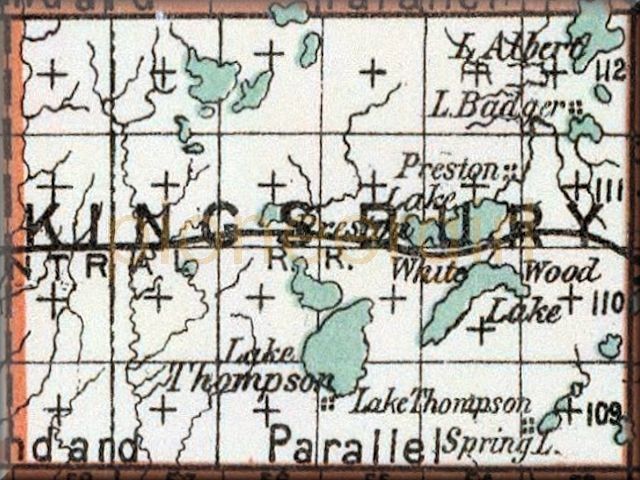
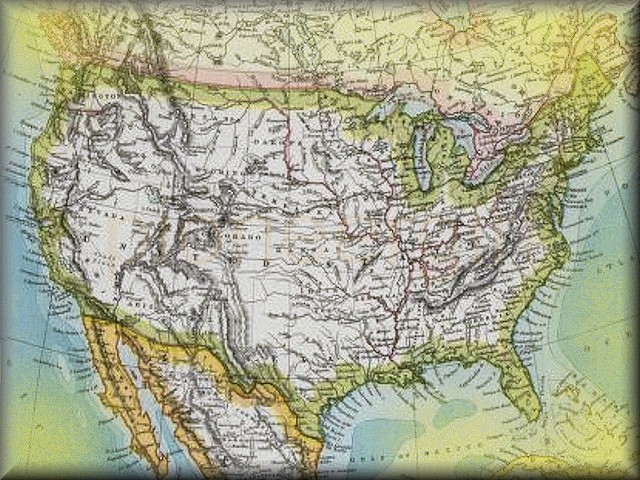
1880 map of Ohio, showing former Western Reserve


There are a lot of “w” things in the “Little House” world of Laura Ingalls Wilder people might rather read about than the Western Reserve: the Whiting brothers who married the Ingalls sisters; the Webb family from Malone; whalebones, wheelwrights, or whip-poor-wills; or anything at all about Walnut Grove. It’s only mentioned once in one book.

In Little Town on the Prairie, when Laura and Ida discuss having to recite the whole of American history from memory:

“I’m glad you’ve got the longer part, anyway,” said Ida. “I’ve only got to remember from John Quincy Adams to Rutherford B. Hayes , but you’ve got all that about the discoveries and the map and the battles, and the Western Reserve and the Constitution. My! I don’t know how you ever can!”

It turns out that the Western Reserve wasn’t mentioned in the Little Town manuscript; and, even worse, it’s not included in Laura’s own history book. Still, it’s in the published book, so here goes:

The Western Reserve was situated in the north east quarter of the current state of Ohio between Lake Erie on the north and Pennsylvania to the east. It extended 120 miles from east to west and on average, 52 miles from north to south. It was half a million acres stricken off of “the West” by the State of Connecticut after the Revolutionary War as a donation to soldiers who fought in the war. Connecticut ended up with the land because King Charles II, in 1662, granted to the then-colony of Connecticut a right to all lands within certain bounds.

In 1800, jurisdiction over this tract was relinquished to the federal government, the State reserving the right to the soil, which was disposed in small lots to settlers from Connecticut. Other lands under Indian title were claimed by the federal government. In 1799, the Northwest Territory — over which Congress had exercised jurisdiction since 1787 — was admitted to a second grade of territorial government. Shortly after, Ohio was detached from it, and formed an independent territory; and, in 1803, it was received as a state into the Union.

V is for volga

In The Long Winter, Laura Ingalls Wilder wrote that after one of the fall snowstorms filled the railroad cuts and prevented the train from getting as far west as De Smet, Pa and a group of men went to Volga on a railroad handcar, clearing the railroad track as they went. They returned several days later on the train. Wilder doesn’t mention Volga in By the Shores of Silver Lake for the simple reason that when the Ingalls family traveled through that portion of Brookings County on their way from the Big Sioux railroad camp to the Silver Lake railroad camp, the town didn’t exist!

Originally called “Bandy Town” after an early settler, Volga was platted in September 1879. Four men each donated 40 acres for a townsite as incentive for the Chicago & Northwestern Railroad Company to put one there, and they did. It was laid out exactly as the original town of De Smet, with four blocks south of the railroad tracks, each block containing 21 lots. Its north/south main street was named Kasan Avenue. Several stores, a post office, hotel, blacksmith shop, saloon, cobbler’s shop, and residences were built immediately. Edelbert and Frank Harthorn opened a store there, moving on to De Smet the following spring.
The first train arrived in Volga in November 1879, and from then until the following May, Volga was the terminus of the railroad. For that reason, it grew quite rapidly that first winter. Multiple lumber dealers sold their goods directly from railroad cars. Although Wilder wrote in By the Shores of Silver Lake that Brookings was the nearest town while they wintered in the Surveyors’ House, Volga (35 miles from De Smet and 7 from Brookings) was continuously occupied to the bursting point with several hundred settlers and workers keeping three hotels filled to capacity. The first load of wheat was brought to town to ship back east only five days after the first train arrived.

Next time you’re in the area – or traveling between the “Little House” sites in Walnut Grove and De Smet, it’s a worthwhile side-trip to turn off the Highway and see Volga, South Dakota. Time your visit so you can spend some time at the Brookings County Museum on the east side of the Volga City Park; you won’t be disappointed. And stop to see the Volga depot at the Wheels Across the Prairie Museum in Tracy, Minnesota. Although it’s not the first depot built in Volga (that one was built on the same plan as the original depot in De Smet, remember), this 1897 depot would have been a familiar site to early railroad travelers.